

How to Spend Less on Ads and Get More Customers: Online Advertising for Small Business in 2026
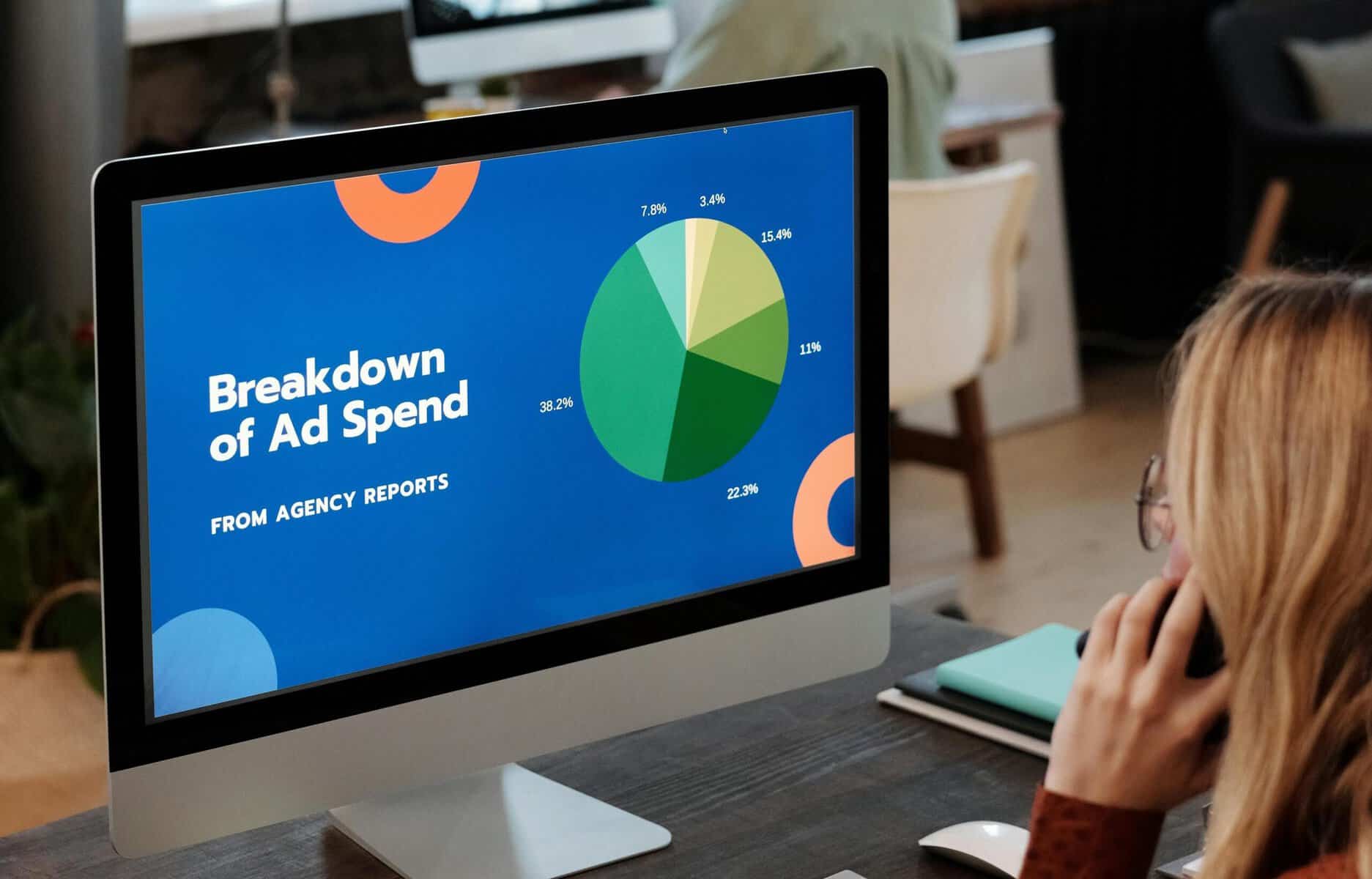
Most small businesses waste more money on online advertising than they realise. Not because advertising doesn’t work — it does, and it can work exceptionally well — but because they’re running ads without the right foundations in place. The good news is that online advertising for small business doesn’t require a large budget to deliver real results. It requires a clear strategy, the right platforms, and a disciplined approach to cutting waste and keeping what works. In this guide, we’re breaking down exactly how to do that in 2026.
At Second Screen Digital, we manage paid advertising campaigns for small businesses every day. The patterns we see — what works, what wastes budget, and what drives genuine customer growth — are what this guide is built on.
Why Most Small Business Ad Budgets Get Wasted
Before we talk about how to spend less and get more, it’s worth understanding the most common reasons small businesses spend leaks. In our experience, the same issues come up again and again:
- Sending traffic to the wrong destination. Ads that drive traffic to a homepage instead of a dedicated landing page are one of the biggest budget killers. If visitors land on a page that doesn’t clearly match what the ad promised, they leave — and you pay for that click anyway.
- Running ads without conversion tracking. If you don’t know which ads are generating leads or sales, you can’t optimize. You’re flying blind and burning budget on campaigns that may be doing nothing.
- Casting a wide net feels safer but costs more and converts less in the long run. Precise targeting — the right audience, right location, right time — almost always outperforms volume once you have all the data ready.
- No negative keywords on Google. Without a negative keyword list, your Google ads can appear for irrelevant searches, wasting budget on clicks that will never convert.
- Stopping too soon. Paid advertising needs time to optimize. Many businesses give up after two or three weeks before the algorithm has had enough data to find its best-performing audience.
For a deeper look at the most common mistakes and how to fix them, our article on paid advertising mistakes that waste your budget is required reading before you spend another dollar on ads.
Google Ads vs. Facebook Ads: Choosing the Right Platform for Your Business
One of the most important decisions in online advertising for a small business is choosing where to run your ads. Google and Meta (Facebook and Instagram) are the two dominant platforms, and they work very differently. Understanding the distinction is the foundation of a smart budget strategy.
Google Ads: Capture demand that already exists
Google Search Ads work by placing your business in front of people who are actively searching for what you sell. The intent is high — someone typing “emergency plumber near me” or “digital marketing agency for small business” is ready to act. That intent drives strong conversion rates, which is why Google Ads delivers an average of around two dollars in revenue for every dollar spent when campaigns are well-managed.
The trade-off is cost. The median cost-per-click on Google sits around $2.29, and in competitive industries like legal, finance, or home services, that can climb significantly higher. The key is focusing your budget on high-intent, revenue-linked keywords rather than broad or informational terms that attract browsers rather than buyers.
Meta Ads (Facebook and Instagram): Create demand for what you offer
Facebook and Instagram ads work differently. You’re not catching people mid-search — you’re reaching them while they’re scrolling, based on who they are rather than what they’re searching for. This makes Meta ads excellent for building awareness, reaching new audiences who don’t yet know your brand exists, and retargeting people who have already visited your website.
The cost-per-click on Meta is lower — averaging around $0.50 to $2.00 — but the buyer intent is softer. Leads from Facebook often require more nurturing before they convert. Instagram currently leads ROI among social platforms according to recent research, followed closely by Facebook, making the Meta ecosystem a strong choice for businesses with a visual product or service and a clear audience profile.
Which should you start with?
The honest answer depends on your business model and budget:
- Under $1,000 per month: Pick one platform, one offer, one objective. Do not split your budget between two platforms until each has enough data to optimise.
- $1,000 to $3,000 per month: Run your primary platform for acquisition and use the second platform for retargeting people who already engaged but didn’t convert.
- Over $3,000 per month: Run both platforms with a coordinated strategy — Google for capturing high-intent searches, Meta for building awareness and re-engaging warm audiences.
How to Set a Small Business Advertising Budget That Makes Sense
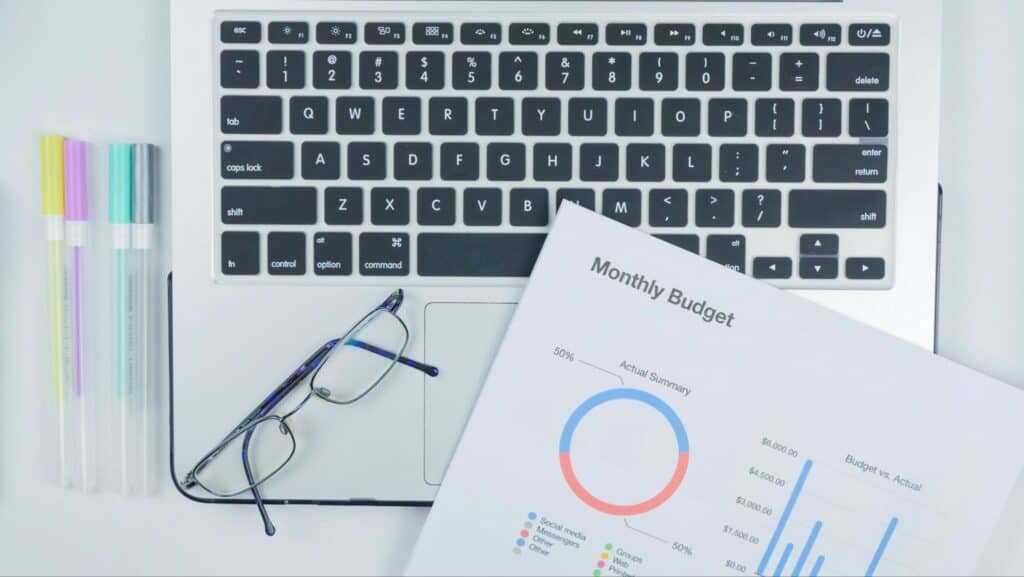
One of the most common questions we hear is: how much should I actually spend? The right answer isn’t a fixed number — it’s a calculation based on your goals, your margins, and what it costs to generate one paying customer.
Here’s the framework we recommend:
- Start with your target cost-per-acquisition (CPA). How much can you profitably spend to acquire one new customer? If your average sale is $500 and your margin is 50%, spending up to $100 to $150 to acquire that customer still makes financial sense.
- Work backward from your lead goal. If you need 20 new customers this month and your target CPA is $100, your ad budget needs to be at least $2,000 — before accounting for conversion rate from lead to sale.
- Allocate a test budget first. For new campaigns, start with 10 to 20 percent of your projected monthly budget for the first four weeks. This gives platforms time to optimise without overcommitting before you have performance data.
- Scale what works, cut what doesn’t. Once you identify a campaign where every dollar generates a positive return, that’s your signal to increase the budget. Never scale a campaign that isn’t yet profitable.
As a general benchmark, small businesses typically spend between $500 and $3,000 per month on paid advertising, with established businesses often investing $1,000 to $2,500 monthly once campaigns are optimised. Most businesses also allocate five to fifteen percent of annual revenue to total marketing spend.
The Non-Negotiables Before You Spend a Single Dollar on Ads
Running ads before these foundations are in place is one of the most reliable ways to waste money. Before you launch any campaign, make sure these boxes are ticked:
1. Conversion tracking is set up correctly
You cannot optimise what you cannot measure. Set up conversion tracking for every meaningful action — form submissions, phone calls, booking confirmations, purchases. Without this, you’re paying for clicks with no visibility into what those clicks are actually generating. This is non-negotiable.
2. Your landing page is ready
Every ad should send traffic to a dedicated landing page — not your homepage, not your “about” page. The landing page should mirror the ad’s message exactly, have one clear call-to-action, load in under three seconds, and be optimised for mobile. A slow or confusing landing page will increase your cost-per-click on Google (via Quality Score penalties) and tank your conversion rate on both platforms.
3. You have a clear, specific offer
Vague ads generate vague results. “We offer digital marketing services” is not an offer — it’s a category. “Free 30-minute strategy session for small businesses” is an offer. The more specific and compelling your offer, the lower your cost-per-lead and the higher your conversion rate.
4. Your audience is defined
On Google, this means knowing exactly which keywords your buyers use — not just broad category terms but the specific phrases that indicate purchase intent. On Meta, this means knowing the demographics, interests, and behaviours of your ideal customer well enough to build a targeted audience. Our guide on digital marketing strategy for small businesses walks through how to build this audience clarity before you spend.
5 Practical Ways to Cut Ad Spend Without Cutting Results
Once your campaigns are live, these are the highest-leverage tactics for reducing waste and improving efficiency without reducing the reach of what’s working:
Build and maintain a negative keyword list on Google
Negative keywords block your ads from appearing on irrelevant searches. If you’re a paid service, exclude terms like “free,” “DIY,” “how to,” and “jobs.” Review your Search Terms report weekly and add new negatives as you spot irrelevant queries. This alone can reduce wasted spend by 15 to 30 percent in the first month.
Test two ad creatives at all times
Never run a single ad without a challenger. A/B testing two versions of your ad — different headlines, different hooks, different calls-to-action — gives the algorithm data to optimise and gives you ongoing intelligence about what resonates with your audience. Change one variable at a time so you know what’s driving the difference.
Use retargeting to lower your cost-per-conversion
Retargeting — showing ads to people who have already visited your website or engaged with your content — consistently delivers lower cost-per-conversion than cold audience campaigns. These people already know you exist. The bar to conversion is lower. A small retargeting budget added to your existing campaigns often generates your most efficient leads.
Focus budget on your best-performing hours and locations
Most small businesses don’t need to run ads 24 hours a day, seven days a week. Review your conversion data by time of day and day of week, and concentrate your budget on the windows when your audience is most likely to convert. Similarly, tighten your geographic targeting to the areas that generate your most profitable customers.
Align your ad creative with your organic content
Your best-performing organic content — the social posts, blog articles, and videos that generate the most engagement — tells you what your audience responds to. Use those themes, formats, and messages to inform your paid ad creative. Ads that mirror what already resonates organically consistently outperform those created in isolation.
For more on how paid advertising fits into a broader marketing system, see our guide on content marketing for small business — organic content and paid ads work best when they reinforce each other.
The Metrics That Actually Matter for Small Business Advertising
One of the most important shifts in online advertising for small business is moving away from vanity metrics — impressions, reach, clicks — and focusing on the numbers that tell you whether your ads are generating real business value. Here’s what to track:
- Cost-per-acquisition (CPA): How much does it cost to acquire one paying customer? This is the most important number in your whole campaign.
- Return on ad spend (ROAS): For every dollar you spend on ads, how much revenue do you generate? A ROAS of 3:1 or higher is typically the minimum threshold for a profitable campaign — though this varies by margin and industry.
- Conversion rate: What percentage of people who click your ad take the desired action? A low conversion rate almost always points to a landing page or offer problem, not an ad problem.
- Cost-per-click (CPC): Useful as a benchmarking metric, but don’t optimise for low CPC in isolation — a higher CPC from a high-intent audience often generates better ROAS than cheap clicks from a broad audience.
- Lead quality: Track how many ad-generated leads actually become paying customers. High lead volume with low close rates is a sign your targeting is off or your offer is attracting the wrong audience.
If you want to understand how all of your marketing channels — paid ads, SEO, content, email — are contributing to your overall results, our roundup of digital marketing trends defining 2026 covers how integrated measurement is reshaping the way small businesses track growth.
When to Manage Ads Yourself vs. When to Get Expert Help

Managing paid advertising in-house is entirely possible for small businesses, but it comes with real trade-offs. Platforms like Google Ads and Meta Ads reward expertise — account structure, bidding strategy, audience segmentation, and creative testing all have a measurable impact on what you pay per click and per conversion.
A common pattern we see: businesses start managing their own ads, generate some results, then hit a ceiling where performance plateaus or costs creep up and they can’t diagnose why. That’s often the point where professional management pays for itself — not just in performance improvement but in reclaimed time for the business owner.
If you’re spending more than $1,500 per month on ads and not seeing a clear, positive ROAS, it’s worth exploring whether professional management could improve your returns. Take a look at our digital marketing services to see how we approach paid advertising for small businesses, or review our recent client work to see the kinds of results we’ve generated.
Final Thoughts
Spending less on ads while getting more customers is not about cutting corners — it’s about cutting waste. The businesses that consistently generate strong returns from online advertising for small business are not the ones with the biggest budgets. They’re the ones who know exactly who they’re targeting, have a clear offer, track every conversion, and keep refining what works. That discipline compounds over time into a paid advertising system that delivers predictable, scalable customer growth.
If you’re ready to build that system for your business, get in touch with the Second Screen Digital team. We’d love to help you make every advertising dollar work harder.
Share: